


Take an Insider's tour of Disney Destiny's engine room
On my Disney Destiny media cruise this week, I spent about 30 minutes underwater... and never got wet.
Disney invited me and a small group of other reporters to visit a part of the ship that guests never see - the engine rooms. Guided by the ship's chief engineering officer, Johan Blokstra, we got to see - up close - the machinery that powers the Wish class ship. Talk about an "Insider" experience!
Not only did we see Disney Destiny's massive engines, we also got to walk around the machinery that controls the ship's super-cold liquefied natural gas [LNG] fuel, its air conditioning, and its water and sewage. Ultimately, they're all connected, with systems working with each other to recycle water and energy to minimize what the Destiny needs to take in to keep running - and expel as a result.
It all happens underneath the guest decks on Disney Destiny. In fact, the bottom levels of the engine rooms lie under water level - not that you would know without being told. There are no windows down here - just clean, white-painted walls connected with a maze of pipes and conduit, sometimes operating at a volume where earplugs become an excellent idea.
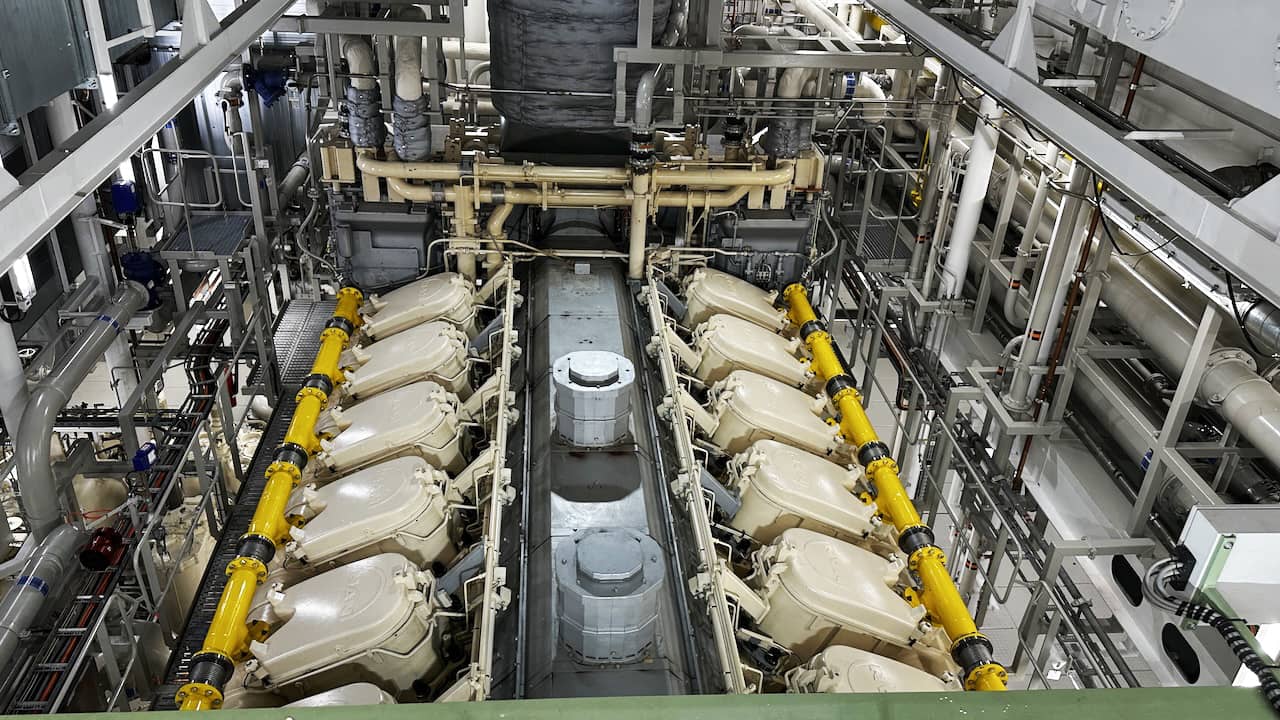
One of Disney Destiny's engines
Looking like supersized V12s, Destiny's five engines not only provide the horsepower to propel the ship, they also work with steam boilers to power the lights, tech, and A/C for the ship's 1,256 staterooms, plus its restaurants, theaters, lounges, and crew facilities. All that power also runs the reverse osmosis process that generates the potable water used on the ship, as well as the filtration systems that clean and recycle waste water so that it can be repurposed or safely discharged.
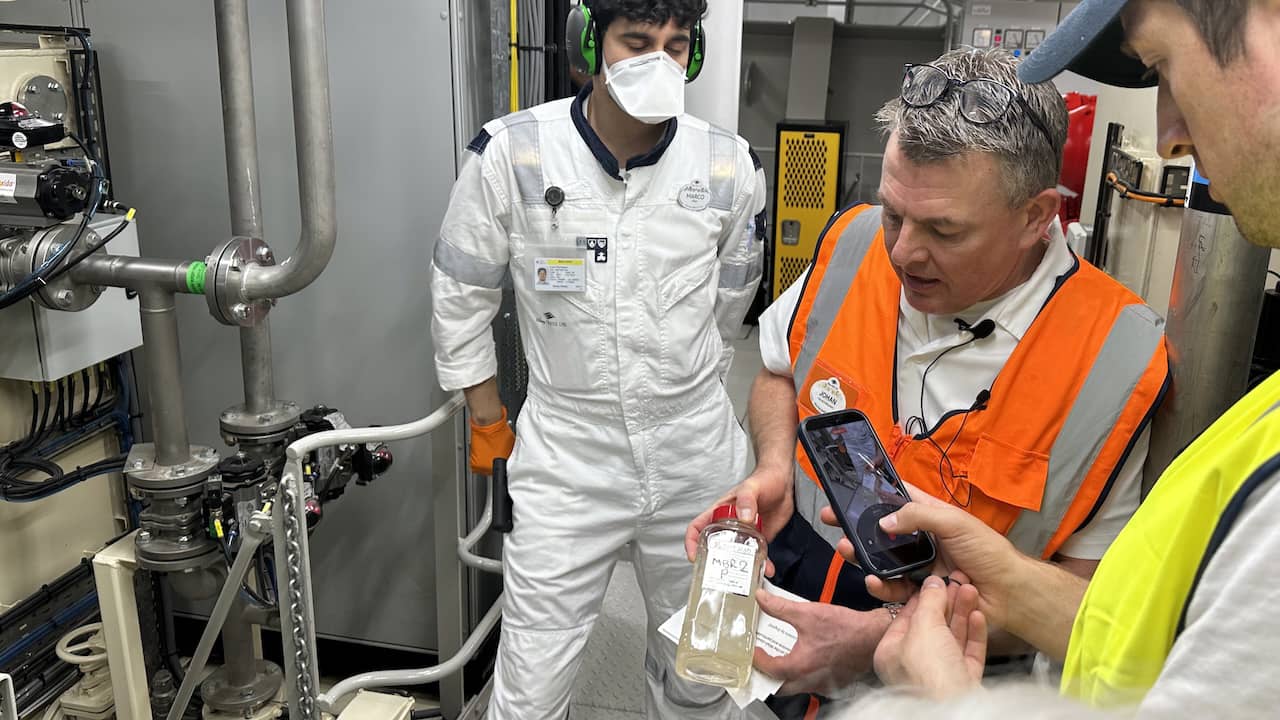
Blokstra shows a sample of cleaned waste water from Disney's filtration system
Anyone who's looked at an air conditioning unit before likely has seen the water condensation that they generate. The Destiny's are no exception, but Disney collects that water to use for its laundry facilities, which clean all those towels and bedding in guests' cabins as well as linens in the restaurants and cast costumes.
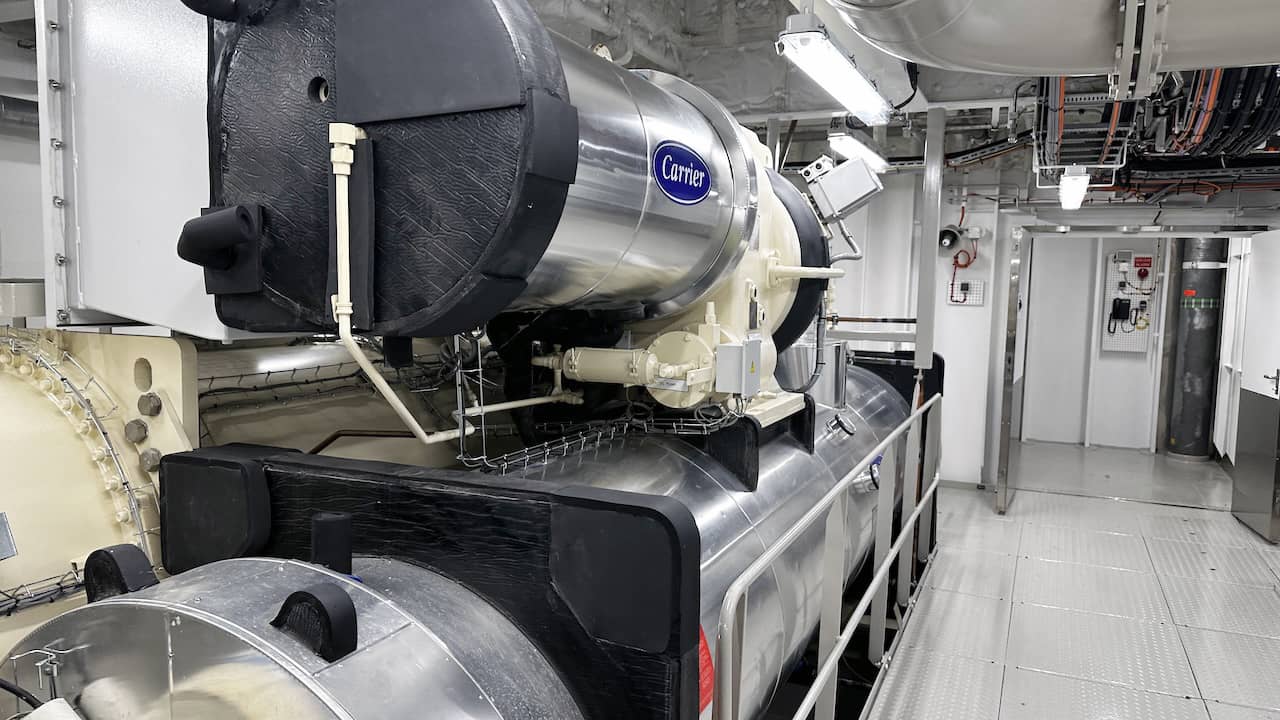
A/C on Disney Destiny
Waste heat from the engines helps power the A/C system, which in turn exchanges heat to convert the ship's nitrogen fuel from super-cold liquid to gas form. Natural gas takes us far less space when it is held in liquid form, which is vital to its use in an environment where space comes at a premium and you can't run a pipe back to the utility grid on shore.
Join me for highlights from our tour:
International regulations are forcing the cruise industry to adopt more environmentally sustainable practices. Traditional marine gas oil - a mix of heavy fuel oil (i.e. "bunker fuel") and distillates - is one of the dirtiest sources of power in travel, contributing to sulfur oxide, nitrogen oxide, and carbon dioxide pollution. Liquified natural gas reduces those emissions, but it still contributes to methane emissions, which is why Disney and the rest of the industry are calling it a "transitional" fuel for the maritime industry.
Ultimately, the changes that Disney has made with its Wish class ships have resulted in a 20 percent reduction in greenhouse gas emissions compared with the fleet's older ships. The larger guest capacity on the Wish class also means a sharp reduction in emissions per passenger. Put it all together, and Disney Cruise Line earned the highest grade among major cruise lines in Friends of the Earth's 2024 Cruise Ship Report Card. (All other major cruise lines scored a D or F.)
The work downstairs is just part of Disney's environmental efforts on its cruise ships. We also walked past the rooms where DCL cast members hand-sort the dry garbage on the ship to select recyclable material. Disney said that each of its ships recycles up to 400 tons of materials annually.
Disney also is eliminating all single-use plastic on the Disney Cruise Line in an effort to further reduce overall waste. Disney set up a display table for us to show off some of the new items that it is producing to replace single-use plastics.
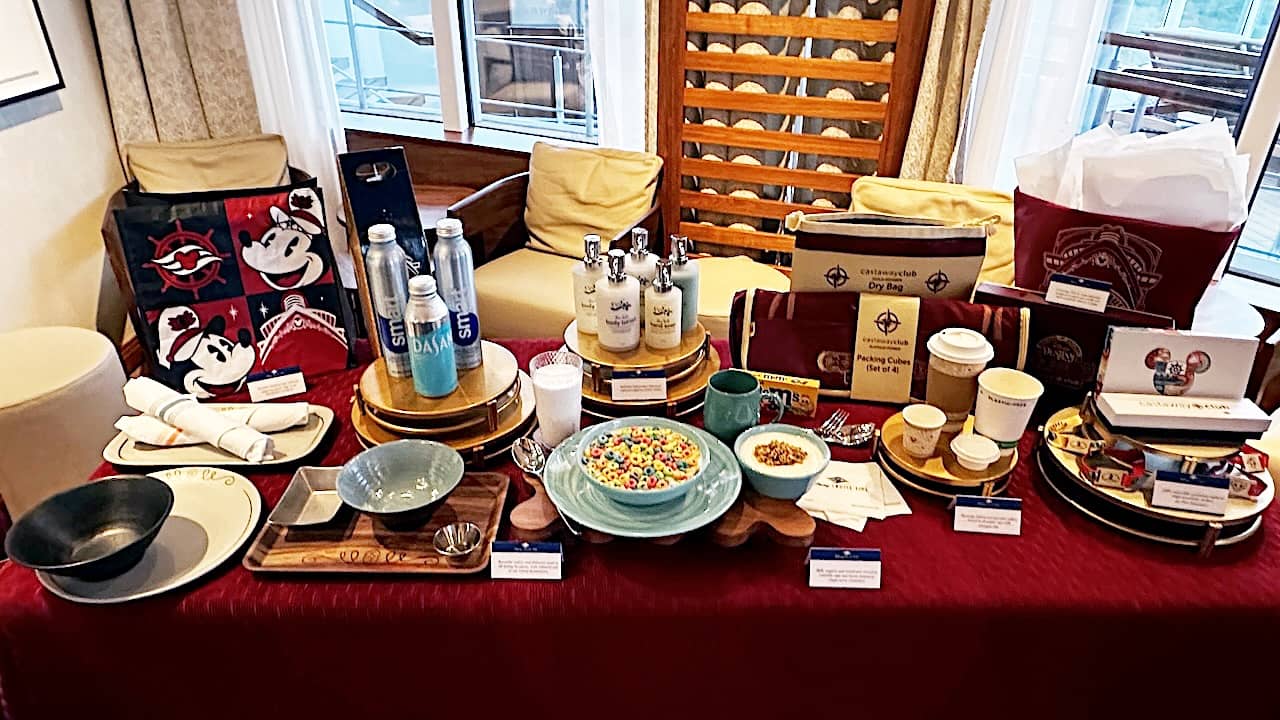
Some of the replacements for single-use plastics on Disney Cruise Line
I know that a lot of people lament the removal of plastic straws, but on the flip side, the elimination of single-use plastic means we get real cutlery as well as sturdier plates, bowls and cups. Disney even is moving toward the use of souvenir ribbon-and-wood bracelets instead of plastic stickers for identifying guests on shore excursions.
For more of our coverage of Disney Destiny - including all the stuff that guests get to see and experience - please see our overview: Everything you need to know about Disney’s new cruise ship.
To keep up to date with more Disney and themed entertainment news, please sign up for Theme Park Insider's weekly newsletter.
Replies (1)
This article has been archived and is no longer accepting comments.


"Disney invited me and a small group of other reporters to visit a part of the ship that guests never see - the engine rooms."
DCL doesn't offer engine room or bridge tours as part of a regular cruise? Most other cruise lines offer those to guests, though sometimes just for those with high-level status. Given that pretty much every DCL itinerary includes a day at sea (even the 3/4 day ones), you'd think an engine room and/or bridge tour would always be something a guest could do if they were willing to pay for it or had enough status since it's the type of experience that can only be given to a limited number of guests and only at certain times (usually only when on open water and not much going on navigationally). I'm pretty surprised this is not a standard offering on DCL, especially given how popular behind the scenes tours are at the parks like Keys to the Kingdom. It's understandable that kids wouldn't be able to do this, but I'm sure there are plenty of Disney Adults who would pay to go behind the scenes of the DCL ships during a day at sea or even when in port if they're not interested in the excursions.
Sustainability is going to continue to be a major focus in the tourism and hospitality industry, but I do think it's going to be important for companies to make these shifts without noticeably increasing prices - though it is important for them to highlight them in marketing like this and other campaigns. While some might appreciate paying more for a more sustainable vacation, many do not want to see that they're paying extra for what is perceived as a reduced experience. Personally, I hate straws (and despise paper ones even more), so I applaud any solutions that move away from them, particularly sip-lids. However, I do wonder if the overall impact of serving food/drinks with reusable containers/cutlery versus disposable/biodegradable versions is actually more sustainable. The energy required to clean/sterilize glass/ceramic/acrylic items on a cruise ship and to treat the resulting greywater, particularly if some of that energy is coming from marine fuel, is probably pretty comparable to what it takes to incinerate paper/bamboo. I love these new fabric/wood bracelets (received one at a sporting event last weekend for the first time) in comparison to the plastic tab versions (paper bracelets and their fiber-reinforced versions are impractical when interacting so frequently with pool and seawater), and they are gaining in popularity, especially since they evoke a more "luxury" and "elevated" experience, which is what DCL is trying to portray.